
So, What Do You Do?
What people really want to know when they meet you
By Dr. Karla R. Van Havel
You have probably heard those five little words a thousand times. Still, something happens between the question and your answer.
Sometimes the answer comes easily. Other times, your mind starts scrolling through your résumé, and three minutes later you're still talking while the other person wears that polite, slightly glazed look.
If that sounds familiar, you're in good company, and I include myself.
Here's the good news: that moment is also where trust can begin.
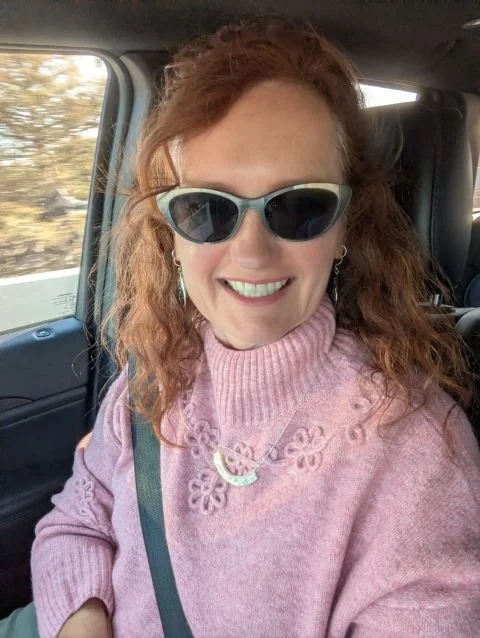
Taking the long way around to Sacramento.
That's me heading over the mountain to the ICF Sacramento conference to present "Presence Before Promotion: Building Trust in the First Coaching Conversation." I-80 was closed because of another fire, so we took the long way around.
A big thank-you to the ICF Sacramento Charter Chapter for the invitation, and to the colleagues and new people who shared the day with me.
Coaches listen for a living, yet even we feel the pull to prove ourselves with a new client. If it happens to us, it can happen to anyone: the manager meeting a new hire, the leader hearing a tough concern, or the business owner exploring a partnership.
The three questions nobody asks out loud
When you meet someone new, they may be trying to answer three questions about you:
Can you help me?
Do you care about what matters to me?
Can I count on you?
Your relevant experience answers the first. Your curiosity and listening answer the second. Your honesty, boundaries, and follow-through answer the third.
Only one of those questions is about your expertise. The other two are about how you show up.
Why we overexplain
Think about a time you really wanted to make a good impression. Maybe you explained too much, jumped to a solution before hearing the whole story, or filled a silence because it felt so uncomfortable.
I understand that urge. It comes from caring about our work.
The catch is that we can become so focused on being chosen that we miss what the person in front of us actually needs.
One question always pulls me back: What am I trying to make happen here?
The freeing part is this: you don't need a perfect pitch. You need to be genuinely interested in the other person, and you already know how to do that.
TRUST: five steps for a better first conversation
In Sacramento, I shared this framework:
T: Tune in before talking
R: Reflect the real need
U: Use clear, simple language
S: Stop overexplaining and share just enough
T: Take the next step together
Tuning in doesn't mean slowing down for everyone. Some people appreciate a brief answer. Others want more detail or a little time to connect. We can notice how they respond and ask what would be useful, rather than assume our preferred way of communicating works for everyone. Understanding those differences in communication style is one of the most practical ways leaders build trust across a team.
Two of the five steps go straight at that urge to prove ourselves.
Stop overexplaining and share just enough. People do need some information. Give them one relevant example or, when it fits the person, a small personal detail. Then hand the conversation back with a question like "What has that been like for you?" and really listen.
Take the next step together. A good first conversation ends with clarity. That might be another meeting or an honest agreement that it isn't the right fit. People should feel free to ask questions, hesitate, or say no without feeling they've let you down.
Small moments build big trust
It all comes down to small choices:
Ask one good question before you answer.
Explain your work simply.
Let people finish their thoughts.
Do what you said you would do.
Each one gives people something concrete to build trust on, and trust is what turns a group into a team and a workplace into a community.
We had to adjust our route to Sacramento. Conversations ask us to adjust, too: listen to the person we're with, check our assumptions, and respond to what we learn.
So the next time someone asks, "So, what do you do?" take a breath, get curious, and notice what this person needs from you.
Let's keep the conversation going
Would you like to bring "Presence Before Promotion" to your team, or work on how you show up in your own high-stakes conversations? I'd love to hear from you. Let's talk.
When you meet someone new, what helps you feel comfortable enough to speak openly?
© 2026 Center for Dynamic Knowledge. All rights reserved.
This content is the intellectual property of Center for Dynamic Knowledge and may not be reproduced or shared without permission.